The problem starts after sunset
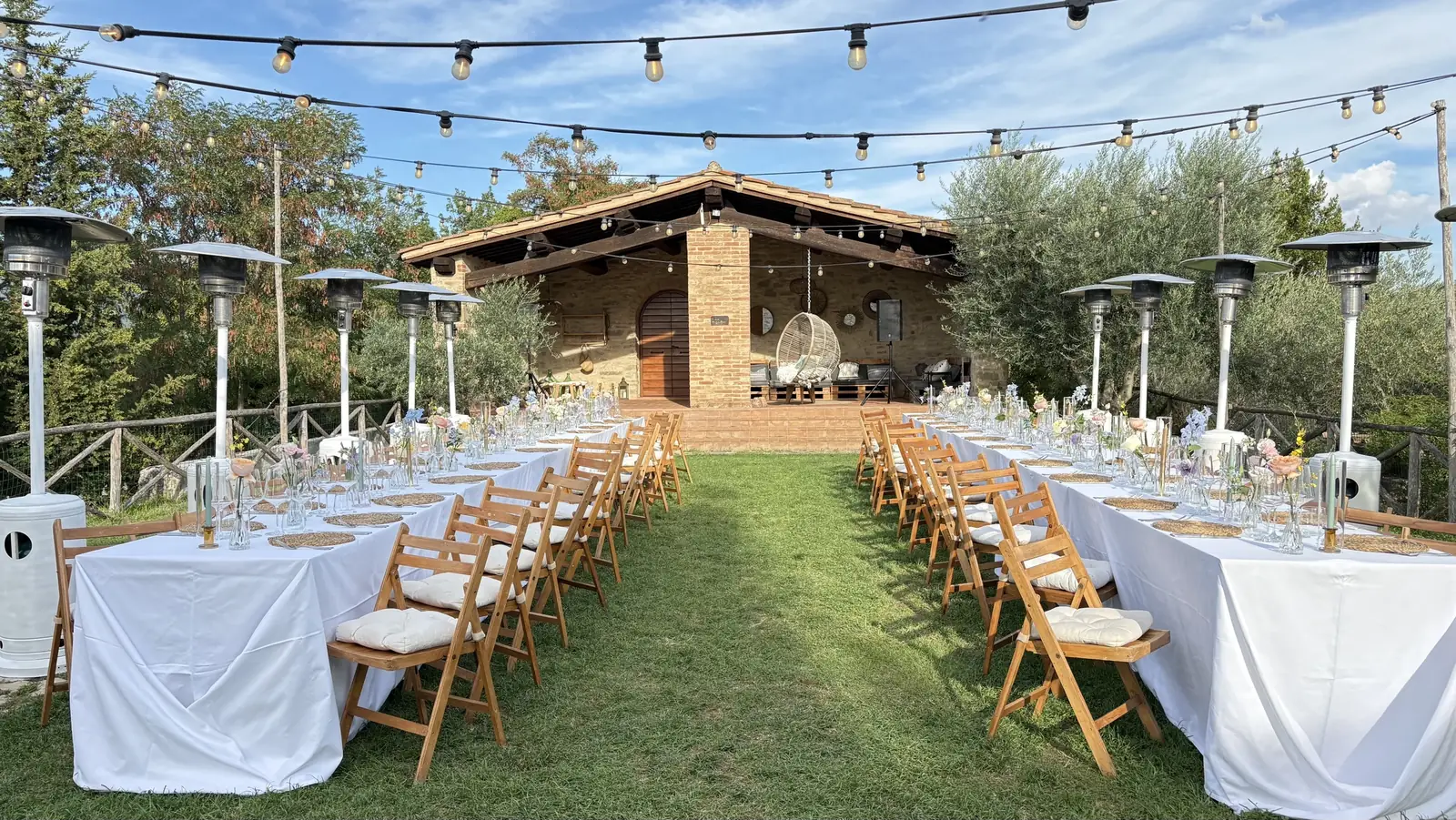
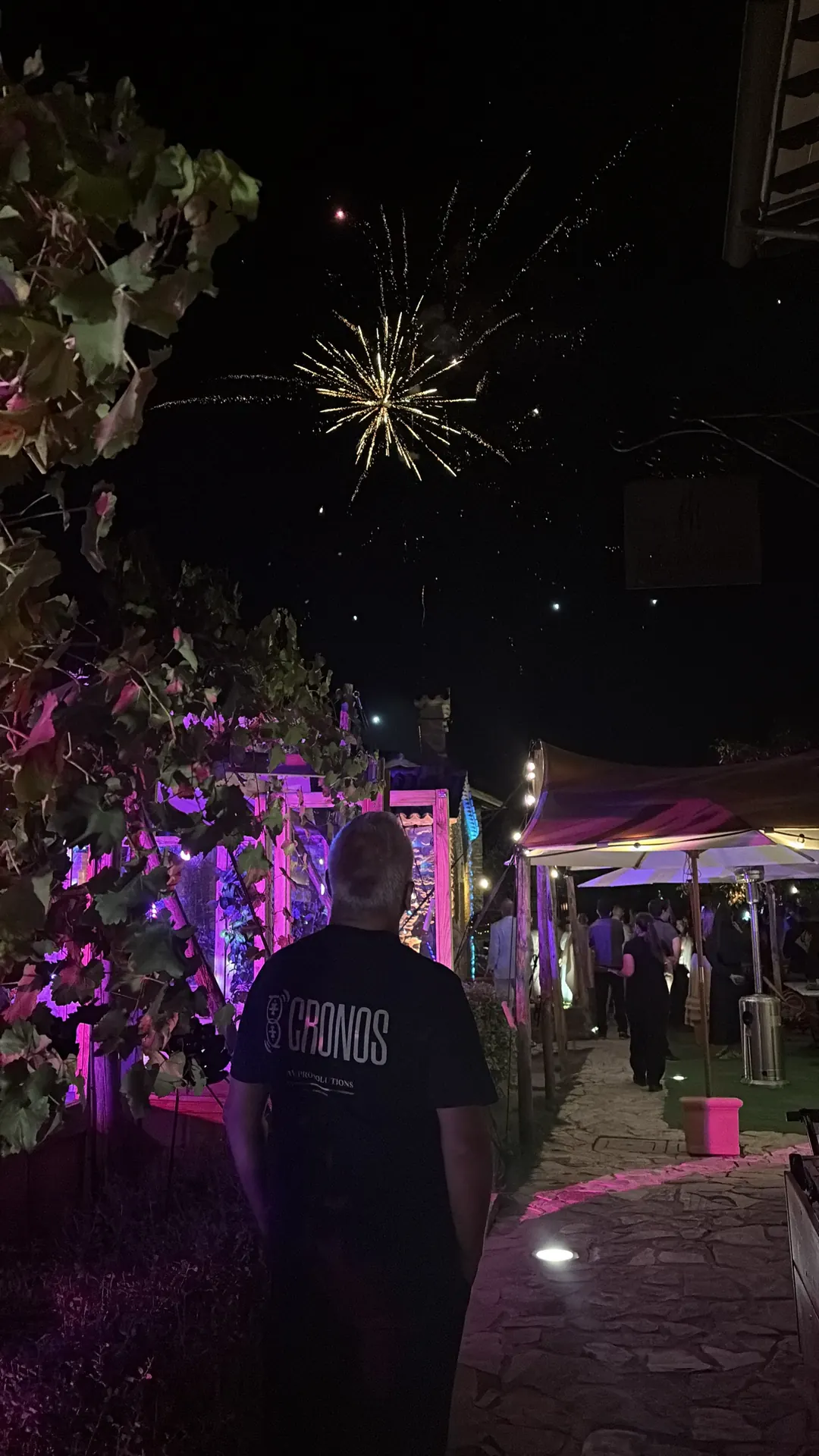
When couples visit a villa for their wedding, they almost always see it by day. The garden is bright, the trees are beautiful, the terrace has a stunning view. Then, on the day, the sun sets during the aperitif or at the start of dinner, and for the rest of the evening guests only see what is lit.
That is why lighting is not a decoration to add at the end: it decides how the venue looks from nine in the evening onwards, which is the longest part of the party. It is worth thinking about when you choose the menu, not the week before.
The three layers of light
A well-lit outdoor wedding works on three different layers, each with a clear purpose.
- Service light: paths, steps, the way to the toilets and the car park. It does not need to be beautiful, it needs to be there. Guests in heels on a dark lawn are a real risk.
- Ambient light: the villa’s façades, the trees, the hedges, festoon lights above the tables. This creates the overall impression and shows in the wide photos.
- Accent light: the tables, the cake, the couple’s table, the dance floor for the first dance. Here you need more precise light that lights faces, not just the space.
Why we use battery uplights
Uplights are small fixtures placed on the ground that light a wall, a column or a tree canopy from below. In a garden they make more difference than any other light, because they shape the space even from a distance.
We use battery models, such as the Astera AX5 in our warehouse, for three reasons: no cables on the lawn, they can be moved in seconds if the planner changes the layout, and they are built for outdoor use, so they cope with evening damp. One charge easily covers the length of a party.
The right colour, for the photographer too
The temptation is to use lots of colours. That works on a façade or on trees, much less on people. For the tables and the couple the safest choice is a warm white, close to candlelight, which flatters skin and flowers.
Saturated colours, especially green and blue, make faces look tired or ill, and the photographer has to correct them one by one. Before the wedding, put the lighting company in touch with the photographer: two messages are enough to avoid problems in post-production.
Power, weather and safety
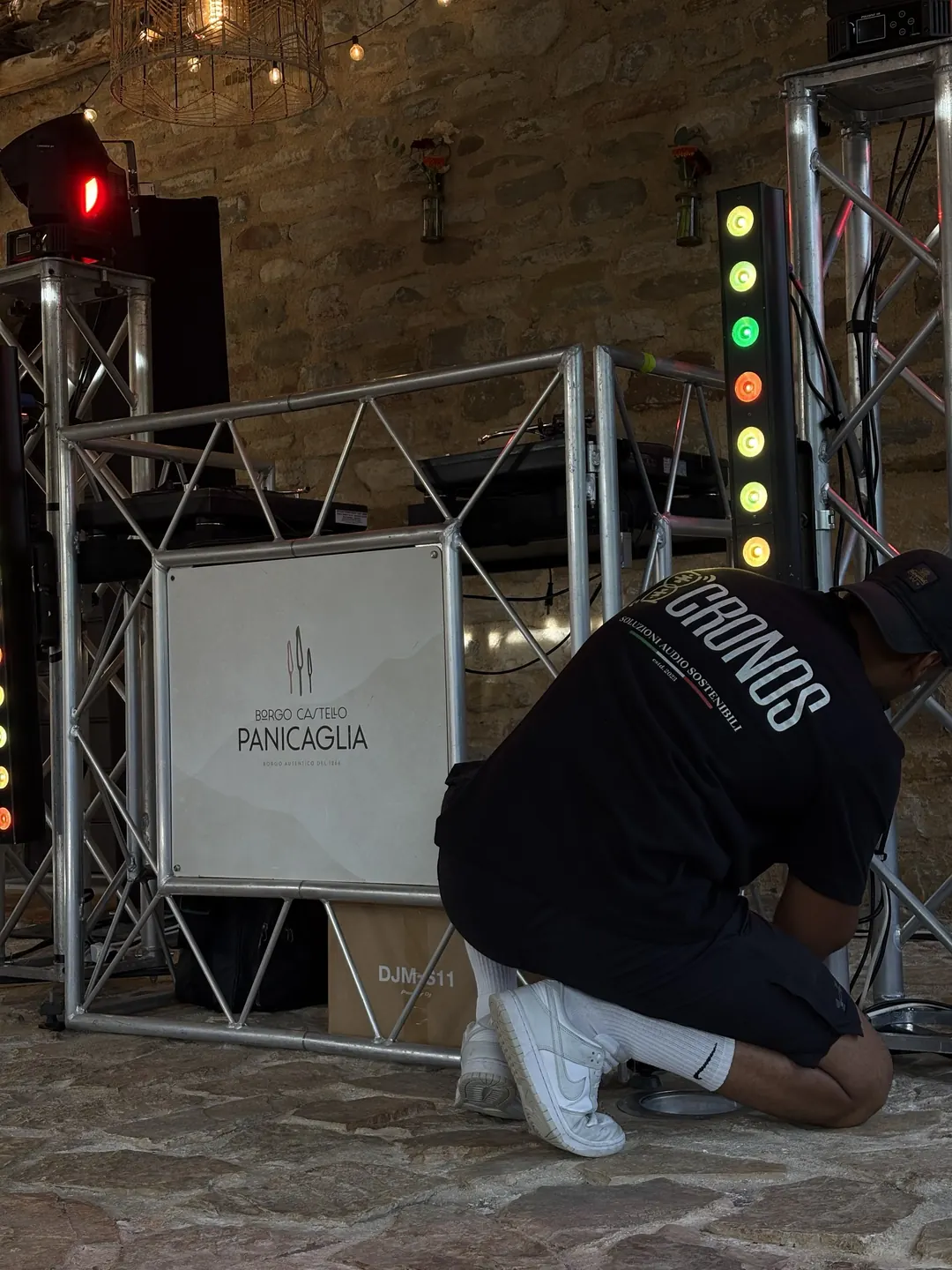
In many villas there is little power near the garden, or it is far away. Battery lights solve much of the problem, but the sound system, the DJ and the dance floor lights need real power: it has to be brought from the distribution board with outdoor-rated cables, routed where nobody trips and protected with cable covers.
Wind is the other enemy: stands and truss must be weighted, and lights hung in trees fixed securely. And there must always be a rain plan, agreed beforehand: where dinner moves, what stays outside, what gets taken down.
What to ask your lighting company
Before you sign a quote, ask these questions. The answers say a lot about how the job will be done.
- Will you visit the venue beforehand, ideally at sunset?
- Which lights run on batteries and which need power?
- Who stays during the party, in case something needs changing?
- When do you set up and strike, and have you agreed it with the venue?
- Is there a plan for rain and wind?
How to get an estimate
In the configurator on our website you can choose “Wedding”, select the moments to cover (ceremony, aperitif, dinner, party) and the number of guests: in a few minutes you get an indicative estimate for three service levels. After the site visit we send the final quote. We work in Rome, Umbria, Tuscany, on Lake Garda and across Italy.